
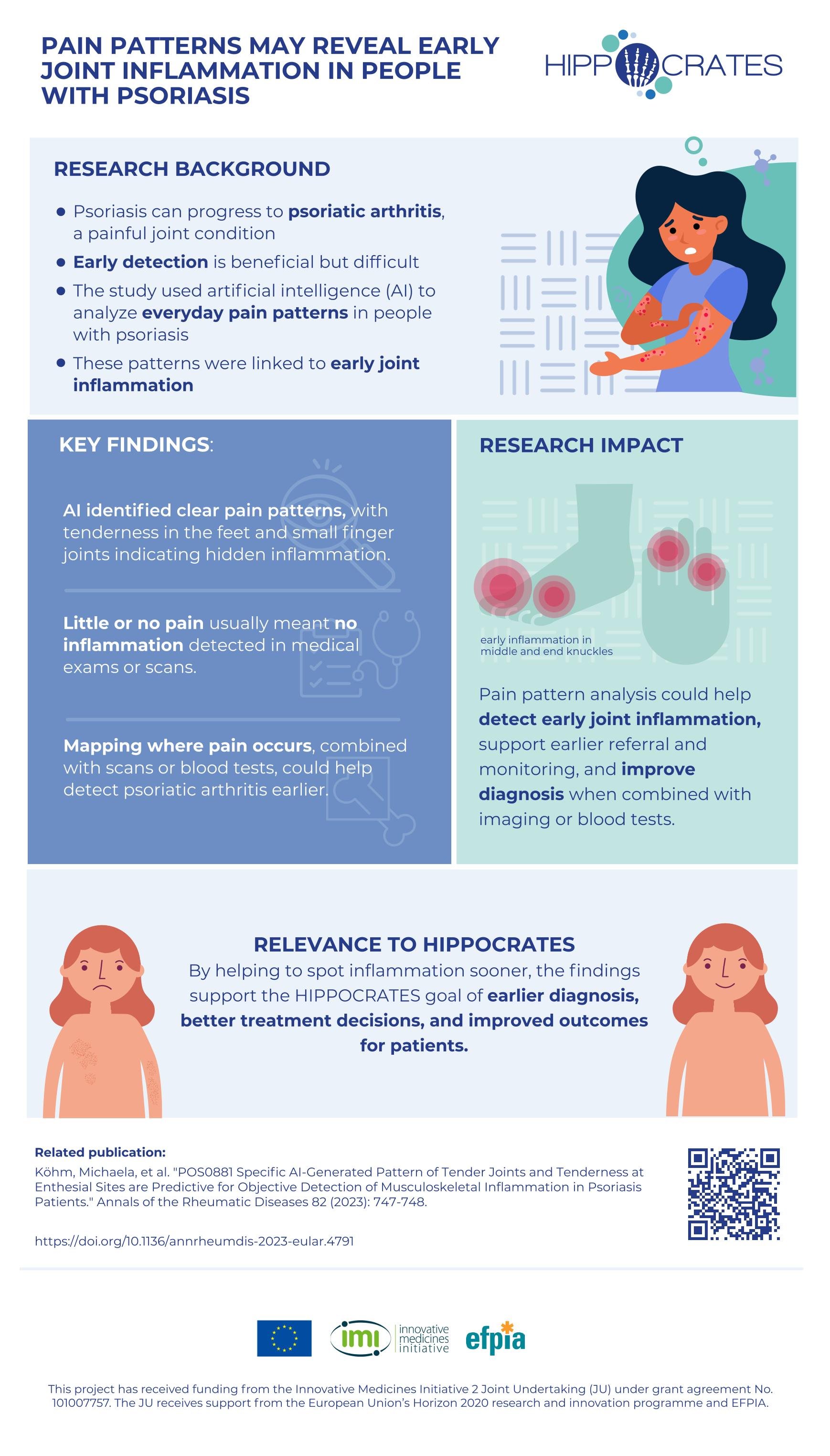
Pain Patterns May Reveal Early Joint Inflammation in People with Psoriasis
Research Background
Psoriasis is a chronic skin disease. For some people, it later develops into psoriatic arthritis (PsA), a painful condition that inflames joints and can cause permanent damage. Up to three in ten people with psoriasis are affected. Early detection of PsA is essential. Treatment works best before joints are damaged. However, early diagnosis is difficult. Symptoms can be vague, and advanced imaging is not always available in routine care. We asked ourselves if everyday pain reports could already point to early joint inflammation. For this, we used artificial intelligence (AI) to look for patterns of pain and tenderness in people with psoriasis who had a higher risk of developing joint problems but without PsA diagnosis. The AI grouped patients by pain location, such as fingers or feet, and compared this with inflammation seen in medical tests.
Key Findings
We found that pain patterns mattered. Certain locations of tenderness were strongly linked to real inflammation detected by clinical examination and imaging. Tenderness in the feet and in small finger joints – especially the middle and end knuckles – often indicated early inflammation, even before PsA was diagnosed. People without pain or tenderness usually showed no signs of inflammation.
Research Impact
Our findings suggest that simply paying attention to where people with psoriasis feel pain could help doctors detect early joint inflammation. This may allow earlier referral for imaging, closer monitoring, and faster access to specialist care. Combining pain pattern analysis with imaging and blood tests could improve early diagnosis and help prevent permanent joint damage.
Relevance to HIPPOCRATES
By helping to spot early inflammation, the findings support the HIPPOCRATES goal of earlier diagnosis, better treatment decisions, and improved outcomes for patients.
View the graphical abstract for an accessible overview!
- Download the lay summary here.